In an increasingly competitive digital landscape, brands are investing heavily in campaigns across multiple channels—from social media and search to content, video, and influencer marketing. Yet not every campaign delivers the desired impact. By analyzing digital campaign case studies across industries, businesses can uncover valuable lessons that improve future planning, execution, and performance.
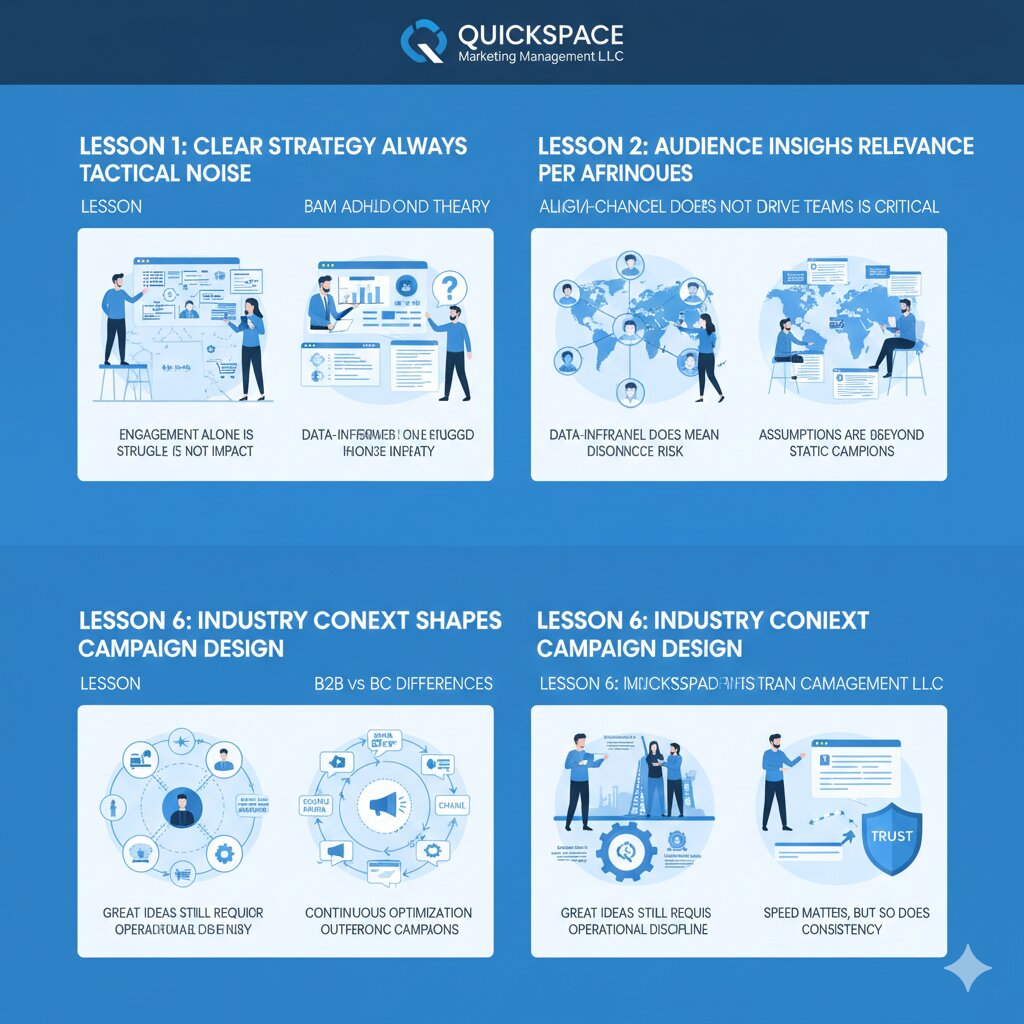
Marketing experts working with organizations like Quickspace Marketing Management L.L.C consistently emphasize that success today is less about isolated tactics and more about strategic alignment, audience insight, and execution discipline. This article explores key lessons learned from recent digital campaigns and how brands can apply them regardless of industry.
Why Digital Campaign Case Studies Matter
Learning Beyond Theory
Best practices and frameworks provide guidance, but real-world campaigns reveal how strategies perform under actual market conditions. Digital campaign case studies highlight what worked, what failed, and why—offering practical insights that theory alone cannot provide.
Cross-Industry Relevance
Although industries differ, many campaign challenges are universal: fragmented messaging, unclear objectives, poor measurement, or weak integration across channels. Studying campaigns across sectors helps brands identify patterns that apply to their own marketing efforts.
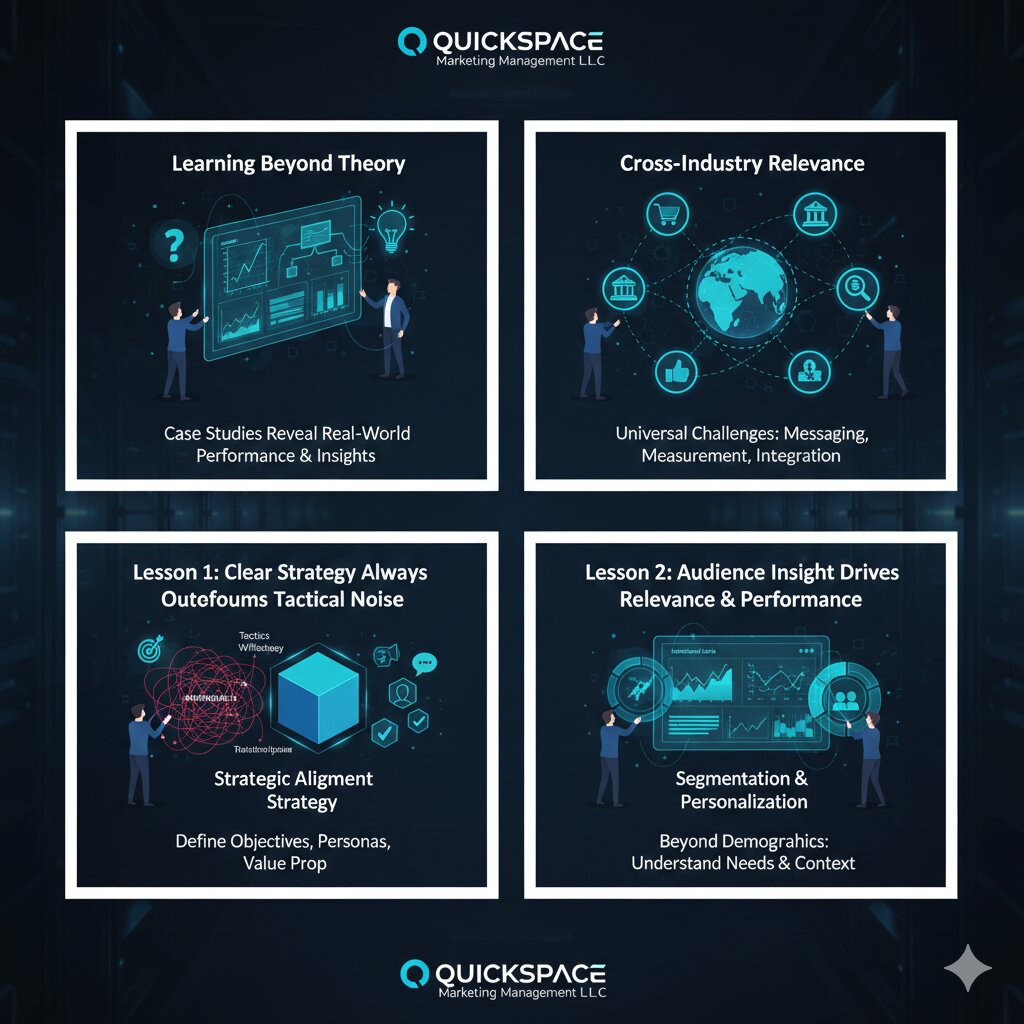
Lesson 1: Clear Strategy Always Outperforms Tactical Noise
Campaigns Without Strategy Struggle to Convert
Many recent campaigns generated high impressions but failed to drive meaningful outcomes such as leads, sales, or brand loyalty. A recurring lesson from digital campaign case studies is that tactics without strategy create activity—not impact, a pattern often driven by common digital strategy mistakes.
Successful campaigns began with:
- Clearly defined business objectives
- Well-articulated audience personas
- A focused value proposition
Organizations advised by Quickspace Marketing Management L.L.C often prioritize strategy workshops before execution to avoid this common pitfall.
Alignment Across Teams Is Critical
Campaigns that succeeded showed strong alignment between marketing, sales, and leadership. When messaging, KPIs, and expectations were aligned, execution became faster and more consistent.

Lesson 2: Audience Insight Drives Relevance and Performance
Data-Informed Personalization Wins
Recent digital campaign case studies consistently show that campaigns rooted in deep audience insight outperform generic messaging. Brands that leveraged behavioral data, intent signals, and customer journeys delivered more relevant content at the right time—mirroring how content marketing is evolving with changing consumer behavior:
- Segmenting audiences beyond basic demographics
- Personalizing messages by stage in the buyer journey
- Adapting creative formats to platform-specific behavior
Assumptions Are a Hidden Risk
Several underperforming campaigns were based on internal assumptions rather than validated audience research. These campaigns often missed emotional triggers or real pain points, resulting in low engagement.
Lesson 3: Integration Beats Channel Silos
Multi-Channel Does Not Mean Disconnected
A key takeaway from digital campaign case studies is that using multiple channels is not enough; brands that understand what makes a digital campaign effective beyond just ads design connected journeys instead of isolated tactics. High-performing campaigns integrated channels into a cohesive journey rather than treating them as isolated tactics.
Successful campaigns aligned:
- Paid media with content and landing pages
- Social engagement with email nurturing
- Brand awareness with conversion-focused touchpoints
This integrated approach is a principle frequently applied by Quickspace Marketing Management L.L.C when designing campaign frameworks for growing brands.
Consistent Messaging Builds Trust
Brands that maintained consistent messaging across channels built stronger recognition and trust. In contrast, fragmented messaging confused audiences and weakened campaign effectiveness.

Lesson 4: Measurement Must Go Beyond Vanity Metrics
Engagement Alone Is Not Impact
Many campaigns reported strong likes, views, or clicks—but failed to influence business outcomes. Digital campaign case studies highlight the importance of defining success metrics tied to real value, such as:
- Qualified leads
- Conversion rates
- Customer acquisition cost
- Lifetime value indicators
Continuous Optimization Outperforms Static Campaigns
Campaigns that incorporated real-time monitoring and optimization consistently outperformed those launched and left unchanged. Adjusting creative, targeting, and budget allocation based on performance data proved essential.
Lesson 5: Execution Quality Makes or Breaks Campaigns
Great Ideas Still Require Operational Discipline
Several campaigns with strong concepts failed due to poor execution—missed timelines, inconsistent creative quality, or broken user journeys. Digital campaign case studies reinforce that execution excellence is just as important as strategy.
High-performing campaigns demonstrated:
- Clear ownership and accountability
- Structured workflows and approvals
- Close collaboration between creative and performance teams
Speed Matters, But So Does Consistency
Brands that balanced agility with consistency were able to respond to market signals without sacrificing brand coherence. This balance is increasingly important in fast-moving digital environments.
Lesson 6: Industry Context Shapes Campaign Design
B2B vs B2C Differences
Case studies show that B2B campaigns often succeed with longer, educational journeys, while B2C campaigns benefit from emotional triggers and faster conversion paths. Applying the wrong model leads to underperformance.
Regulated Industries Require Extra Care
Campaigns in finance, healthcare, and enterprise technology highlighted the importance of compliance, trust signals, and credibility. Overly aggressive tactics in these sectors often backfired.
How Brands Can Apply These Lessons
Start With Clear Objectives
Every campaign should answer one question: What business outcome are we trying to influence? This clarity guides all subsequent decisions.
Design Campaigns as Systems, Not Ads
Effective digital campaigns function as systems—connecting channels, content, data, and measurement into a unified experience.
Learn From Case Studies, Then Adapt
Digital campaign case studies provide direction, not templates. Brands must adapt lessons to their audience, industry, and maturity level.
Working with experienced partners such as Quickspace Marketing Management L.L.C helps brands translate insights from case studies into practical, scalable campaign strategies.
Turning Digital Campaign Case Studies into Competitive Advantage
Recent digital campaign case studies across industries reveal a consistent truth: success comes from strategic clarity, audience understanding, integrated execution, and disciplined measurement. Campaigns fail not because of a lack of tools, but because of misalignment between ideas, execution, and business goals.
Brands that actively learn from real-world campaigns—and apply those lessons thoughtfully—are better positioned to create digital campaigns that move from idea to impact. In an increasingly crowded digital environment, learning from others’ successes and failures is no longer optional; it is a strategic advantage.