Despite rapid advances in technology and access to data, many brands continue to struggle with digital performance. The problem is rarely a lack of tools or platforms—it is poor strategic execution. According to consultants at Quickspace Marketing Management L.L.C, a large percentage of underperforming campaigns can be traced back to recurring digital strategy mistakes that brands continue to repeat.
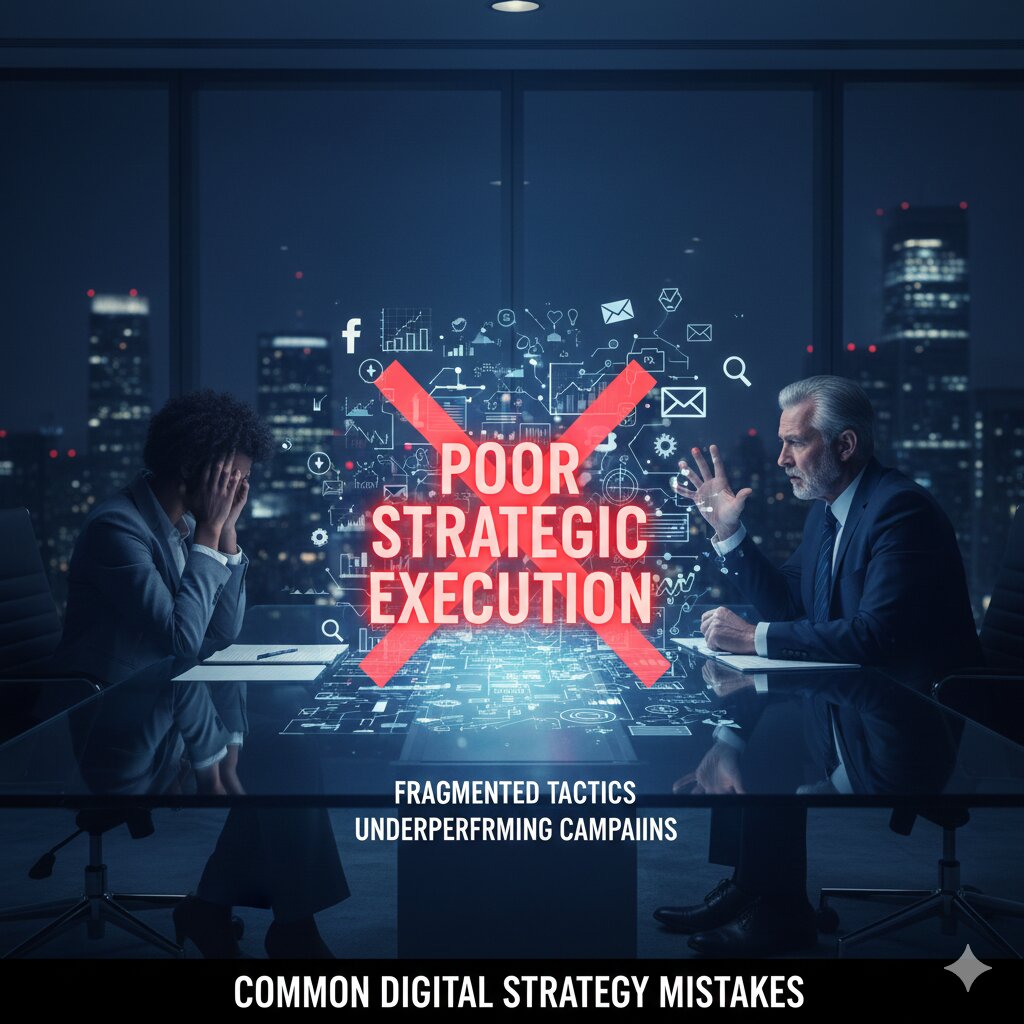 Understanding these mistakes is critical for organizations that want to improve efficiency, strengthen brand positioning, and achieve sustainable growth in an increasingly competitive digital landscape.
Treating Digital Strategy as a Collection of Tactics
Focusing on Channels Instead of Strategy
One of the most common digital strategy mistakes is confusing activity with strategy. Many brands define their digital strategy as a list of actions:
- Running paid ads
- Posting on social media
- Publishing blog content
While these activities are important, they do not constitute a strategy on their own. A true digital strategy defines why these actions exist, how they connect, and what business outcomes they support.
Lack of Strategic Direction
Without a clear strategic framework, digital efforts become fragmented. Teams may work hard, but results remain inconsistent because activities are not aligned with broader business goals. This challenge highlights why having a digital strategy matters more than ever for growing brands.

Ignoring the Customer Journey
One-Size-Fits-All Messaging
Another major digital strategy mistake is failing to tailor messaging to different stages of the customer journey. Many brands push the same message across all channels, regardless of whether the audience is discovering the brand or ready to convert.
Effective strategies map content and channels to:
- Awareness
- Consideration
- Decision
- Retention
Ignoring this structure leads to wasted spend and missed opportunities.
Misunderstanding Customer Behavior
Brands often rely on assumptions rather than data to define customer needs. This disconnect results in campaigns that fail to resonate or deliver value.
Over-Reliance on Short-Term Performance
Chasing Immediate Results Onl
Many organizations prioritize short-term metrics such as clicks, impressions, or quick conversions. This short-term mindset contrasts sharply with what a modern digital marketing strategy looks like in 2026. While these metrics have value, overemphasis on immediate results is one of the most damaging digital strategy mistakes.

Short-term thinking often comes at the expense of:
- Brand equity
- Trust
- Long-term customer relationships
Neglecting Long-Term Brand Building
Digital strategy must balance performance marketing with brand development. Without long-term investment, brands struggle to maintain relevance and differentiation.

Poor Integration Across Digital Channels
Operating in Silos
Siloed execution remains a persistent issue. Social media, paid media, content, and email are often managed separately, leading to inconsistent messaging and duplicated effort.
This lack of integration is a core digital strategy mistake that weakens overall impact and limits insight.
Inconsistent Brand Experience
When channels are not aligned, customers experience fragmented brand interactions. Consistency across platforms is essential for building trust and recognition.

Misusing Data and Analytics
Tracking Too Many Metrics
More data does not automatically lead to better decisions. Many brands track excessive metrics without clarity on which indicators actually matter.
This results in confusion rather than insight—a common digital strategy mistake in data-driven organizations.
Not Connecting Data to Decisions
Data should inform strategy, not exist in isolation. When insights are not translated into action, analytics loses its value.
Underestimating Organizational and Process Issues
Lack of Internal Alignment
Digital strategy often fails due to misalignment between marketing, sales, leadership, and operations. Without shared goals and KPIs, execution becomes inefficient.
Weak Governance and Ownership
When no one owns the digital strategy holistically, decisions become reactive. Clear ownership and accountability are essential for success.
Consulting teams such as Quickspace Marketing Management L.L.C frequently address these issues by helping brands align structure, process, and strategy.
Ignoring Scalability and Future Growth
Building for Today Only
Another critical digital strategy mistake is designing systems that cannot scale. As brands grow, fragmented tools and manual processes quickly become barriers.
A strong digital strategy anticipates growth and builds flexible foundations.
Delaying Strategic Modernization
Postponing strategic updates often increases long-term costs. Brands that fail to evolve their digital strategy risk falling behind more agile competitors.
How Brands Can Avoid These Digital Strategy Mistakes
Start with Clear Business Objectives
Every digital initiative should support defined business goals. Strategy must guide execution—not the other way around.
Design Integrated, Customer-Centric Systems
Successful brands build strategies around customer journeys and integrated platforms rather than isolated campaigns.
Balance Short-Term Performance and Long-Term Value
A mature digital strategy balances measurable performance with brand strength and trust.
Work with Strategy-First Partners
Experienced partners like Quickspace Marketing Management L.L.C help brands identify gaps, eliminate inefficiencies, and build cohesive digital strategies aligned with long-term growth.
Turning Digital Strategy Mistakes into Strategic Advantage
Digital strategy mistakes persist not because brands lack resources, but because they lack clarity and alignment. By recognizing these common pitfalls, organizations can move beyond reactive execution and toward intentional, strategic digital growth.
Brands that treat digital strategy as a long-term system—rather than a set of disconnected tactics—are better positioned to compete, adapt, and lead. Avoiding these mistakes is not just about improving marketing performance; it is about building a stronger, more resilient business in a rapidly evolving digital world.